Air Pollution Icons for Professional and Creative Workflows
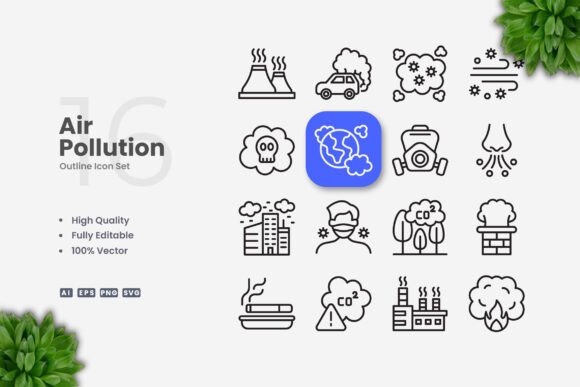
Air Pollution Icons are a set of high-quality, vector-based visual elements designed to represent air pollution-related concepts. These icons serve as essential tools for professionals and creators who need clear, consistent, and visually appealing representations of environmental issues in their work. Whether you're designing for a website, mobile app, social media campaign, or print material, Air Pollution Icons offer a versatile solution that fits into various design processes and platforms.
Understanding the Role of Air Pollution Icons in Design Processes
Air Pollution Icons are not just decorative elements; they play a functional role in communication and user experience. They help convey complex ideas quickly and effectively, making them ideal for use in infographics, educational materials, and public awareness campaigns. These icons can be integrated at different stages of a project—before, during, or after the design process—to enhance clarity and engagement.
For instance, during the planning phase of a website redesign, designers might use Air Pollution Icons to visualize content sections related to environmental topics. This helps stakeholders understand the layout and purpose of specific pages before development begins. Similarly, in a marketing campaign, these icons can be used to highlight key messages about air quality and health risks, ensuring consistency across all materials.
Customization and Flexibility for Different Projects
The versatility of Air Pollution Icons lies in their customizable nature. Each icon is 100% vector-based, allowing users to resize, recolor, or adjust stroke weights without losing quality. This flexibility makes them suitable for a wide range of applications, from digital interfaces to physical prints. Whether you're working on a mobile app or a poster, the ability to modify these icons ensures they align with your brand's visual identity and design requirements.
Users can easily edit these icons using popular vector software such as Adobe Illustrator or CorelDRAW. This level of control allows for seamless integration into existing design systems and workflows. For example, a graphic designer working on a brochure might adjust the color scheme of Air Pollution Icons to match the overall theme of the publication, ensuring a cohesive look and feel.
Workflow Integration and Practical Implementation
Incorporating Air Pollution Icons into your workflow requires careful planning and organization. Start by identifying where these icons will be used within your project. This could involve mapping out sections of a website, determining which social media posts will include them, or outlining the visual elements of a presentation. Once the placement is clear, you can proceed to select and customize the icons accordingly.
When working with a team, it's important to establish guidelines for using these icons to maintain consistency. This might include defining color palettes, stroke weights, and sizing standards. By creating a shared style guide, you ensure that everyone involved in the project uses the icons in a uniform manner, reducing the risk of visual inconsistencies.
File Formats and Compatibility
Air Pollution Icons come in multiple file formats, including AI, EPS, SVG, PNG, and a Readme.txt file. This variety ensures compatibility with different design tools and platforms. For example, SVG files are ideal for web use, as they scale smoothly across devices and maintain clarity at any size. PNG files with transparent backgrounds are perfect for digital projects that require precise placement over images or gradients.
The inclusion of source files like AI and EPS allows for advanced editing and customization, making these icons suitable for professional-grade design work. Meanwhile, the Readme.txt file provides useful information about the icons, such as their intended use and technical specifications. This documentation can save time and reduce errors when implementing the icons into your projects.
Best Practices for Using Air Pollution Icons
To get the most out of Air Pollution Icons, consider the following best practices:
- Plan Ahead: Identify where and how the icons will be used before starting the design process. This helps avoid last-minute adjustments and ensures a more efficient workflow.
- Consistency is Key: Use the same style, color, and size for all icons within a project to maintain visual harmony.
- Test Across Platforms: Ensure that the icons look good on different devices and screen sizes, especially if they will be used in digital formats.
- Document Your Choices: Keep track of any customizations made to the icons, such as color changes or stroke adjustments, to maintain clarity for future edits.
Enhancing User Experience with Air Pollution Icons
Air Pollution Icons contribute to a better user experience by providing visual cues that help users navigate and understand content more easily. In mobile apps, for example, these icons can be used to indicate features related to air quality monitoring or environmental data. This improves usability and makes the app more intuitive for users.
In educational settings, these icons can be used to illustrate concepts related to environmental science, making complex ideas more accessible to students. Teachers and educators can incorporate them into presentations, handouts, or interactive learning materials to engage learners and reinforce key points.
Long-Term Use and Maintenance
When using Air Pollution Icons in long-term projects, it's important to consider their maintenance and updates. As design trends evolve, you may need to revisit and refine the icons to keep them relevant and effective. Regularly reviewing and updating your icon library ensures that your designs remain fresh and aligned with current standards.
Additionally, keeping backups of your customized icon files is crucial. This protects against data loss and ensures that you can easily access and reuse the icons in future projects. By maintaining an organized and up-to-date icon collection, you streamline your workflow and reduce the time spent on repetitive tasks.